
Mediterranean Diet Basics
The basics of the Mediterranean diet can be broken into 9 important areas of change for your health:
1. Vegetables -
This one's pretty easy. It’s hard to eat too
many vegetables...
2. Legumes - Making beans your choice for
a starch...
3. Fruits and nuts - Fruit is the perfect snack...
4. Cereals - Whole grains are really good for you...
5. Fish - More fish,
less meat...
6. Olive oil - This really means eating more
monounsaturated fat...
7. Dairy products - The traditional
Mediterranean diet doesn’t have
dairy products as a major focus...
8. Meats - Less meat and
lean meats...
9. Alcohol - There is good evidence that moderate
use of alcohol is good for you...
Need more information? Read about the research!
Just Tell Me What to Eat!
The Delicious 6-Week Weight Loss Plan for the Real World
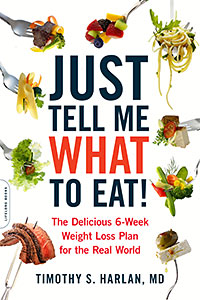
Timothy S. Harlan, MD, FACP has counseled thousands of his patients on healthy, sustainable weight loss. Now he's compiled his best tips and recipes into a six-week plan for you to learn how to eat great food that just happens to be great for you.
Get the prescription for better health as well as healthy weight loss, including:
What to eat
How to cook it
When to eat it
What to eat at a restaurant
What to eat if you're in a hurry
and best of all....
Why eating great food is the best health decision you'll ever make.
The Mediterranean Diet
No. 1 - Vegetables
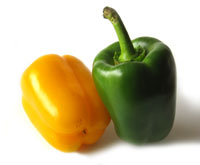 This one’s pretty easy. It’s pretty much impossible to eat
too many vegetables. Keep in mind that veggies aren’t just for dinner.
Making them a part of your lunch and as snacks is one way to eat more. Pile
that sandwich high with cucumbers, peppers, lettuce, tomatoes, onions. Anything
that you like. Things that you don’t think you like you might if you
give them a second chance.
This one’s pretty easy. It’s pretty much impossible to eat
too many vegetables. Keep in mind that veggies aren’t just for dinner.
Making them a part of your lunch and as snacks is one way to eat more. Pile
that sandwich high with cucumbers, peppers, lettuce, tomatoes, onions. Anything
that you like. Things that you don’t think you like you might if you
give them a second chance.
Make plans to have an extra helping for dinner. It won’t add many calories and helps fill you up.
I often have patients say, “I don’t like vegetables, doc.” When I ask them if there are any that they do like I always get a good response. The reply is “Sure, I love spinach.” As I ask about more vegetables I get more positive responses. Make a list for yourself of the veggies that you like and keep them on hand. It will be longer than you think.
Here's information about different vegetables used in recipes on the Dr. Gourmet web site:
Arugula
Asparagus
Beets
Bok Choy
Bottled Peppers
Brussels Sprouts
Button Mushrooms
Cabbage, White
Celery
Choosing Eggplant
Cipolini Onions
Collard Greens
Cucumbers
Cucumbers, Fiber in
Eggplant
Eggplant, Choosing
Eggplant, Nutrition
Eggplant, Salt and
Fennel
Frozen Peas
Green Beans
Green Onions
Jicama
Leeks
Lettuce, Romaine
Mushrooms, Button
Mushrooms, Crimini
Mushrooms, Shiitake
Napa Cabbage
Onions
Parsnips
Peas, Frozen
Peppers
Peppers, Bottled
Peppers, Chipotle
Peppers, Hot
Poblano Chilis
Shallots
Spinach, Fresh
Spinach, Frozen
Sprouts, Bean
Squash
Squash, Yellow
Squash, Zucchini
Tomatillos
White Cabbage
Vegetable side dishes and vegetarian recipes:
Sides:
Candied Carrots
Cheese Stuffed Peppers
Collard Greens
Green Beans with Red Onion
Herbed Zucchini
Lemon Butter Brussels Sprouts
Minted Peas
Pan Grilled Asparagus
Pan Grilled Broccoli
Parmesan Squash
Roasted Acorn Squash
Roasted Beets
Roasted Tomatoes
Sauteed Arugula
Sauteed Spinach
Shredded Brussels Sprouts
Spiced Snap PeasVegetarian Main Course Dishes:
Asparagus Linguine
Baked Penne
Baked Ziti
Butternut Squash Risotto
Chile Rellenos
Chopped Salad Tacos
Corn Quesadillas
Creamy Mac and Cheese
Eggplant Parmesan
Fettucine Alfredo
Fettucine with Roasted Eggplant and Broccoli
Fettucine with Roasted Mushrooms
and Cipollini Onions *
Fettuccine with Roasted Red
Pepper Vinaigrette *
Fettuccine with Olive Oil and Garlic
Gnocchi
Mona's Sauteed Veggie Plate
Mushroom Risotto
Mushroom Souffle
Pasta with Tomato Sauce
Pizza - Tomato, Basil, and Roasted Garlic
Pizza - Dill Pesto and Potato
Pizza with Roasted Eggplant and Feta
Ratatouille
Red Pepper Orzo
Soft Corn Tacos
Vegetarian Lasagna
Yam Gnocchi
Zucchini Chèvre Risotto
* Contains chicken stock. Substitute low-sodium vegetable stock, if desired.
Research Articles: Vegetables in The Mediterranean Diet
You can read more about the science of why eating veggies is so good for you in these articles:
Vitamin C from Fruits and Vegetables and Inflammation: Research shows that heart disease, strokes and other conditions are at least partly caused by inflammation. There are a number of markers in the blood that researchers use to evaluate inflammation, so there is naturally a great deal of interest in factors that may help decrease these inflammatory markers in the blood.
What actually works to keep the weight off: There's a lot of talk, but not a lot of hard data, to show which weight-loss and weight maintenance strategies are actually effective. Fortunately, an article published last year in the International Journal of Behavioral Nutrition and Physical Activity sheds some light on the subject using a fairly straightforward strategy: asking successful dieters.
Adolescents low in fruits and vegetables: We've known for a while that a diet high in fruits and vegetables can help reduce your risk of many chronic diseases, including heart disease, cancer, and diabetes. Since healthy eating habits are most easily set early in life, childhood and adolescent eating habits are becoming an important topic in dietary research.
Fruits and vegetables for prostate health: Benign Prostatic Hyperplasia (BPH) happens to almost all men as they age. It's a non-cancerous enlargement of the prostate whose most common symptom is difficulty in urination. Usually it's not a serious problem, but it can affect the sufferer's quality of life. Just how much someone's life is affected by their BPH symptoms is measured by a standard questionnaire called the American Urological Association Symptom Index (AUASI). The higher the score on the questionnaire, the more the patient is bothered by their symptoms.
Like parents, like kids: Experts in pediatrics have identified four important activity and dietary recommendations for children's health. They are: Total fat intake of less than 30% of caloric intake per day; 60 minutes per day of moderate to vigorous physical activity; watching television (including video games and the like) for less than two hours per day; and eating at least five servings per day of fruits and vegetables.
Eat your fruits and vegetables and keep your mouth happy: Oral cancer, primarily a disease that occurs in men, was the seventh most common form of cancer—for both sexes—in 2002. Over 210,000 death are caused each year by oral cavity and pharynx cancers. The primary risk factors are well known and include chewing and/or smoking tobacco and consuming alcohol. Often nutritional and dietary deficiencies are linked to oral cancers, but recent research studies have sought to determine the effect of fruit and vegetable intake.
Eating more CAN mean weighing less! Weight management is a simple mathematical formula: calories in must equal calories out. The simplest advice for weight loss, then, is to eat less. Easy for some people, but for most people simply eating less means feeling hungry and dissatisfied, especially when large portions of high-calorie foods are so widely available. To combat this, organizations such as the American Diabetes Association have recommended that instead of simply eating less of the same foods, they should eat the same amount of foods, but switch to those that are lower in calories.
Tomatoes, Olive Oil, and Heart Disease: The Mediterranean Diet has been shown to protect against heart disease, but just why it does so isn't quite clear. Its effects have been credited to a variety of foods in the typical Mediterranean Diet, including components of the fruits and vegetables and the red wine. The effects have also been credited to tomatoes and tomato products, which are an important source of lycopenes. . . .
Mix Up Your Veggies and Fruits: It has been well established that eating vegetables and fruits (VF) has many health benefits. Most research indicates that it is the antioxidant properties that are responsible for their positive effects. Some of the most widely studied have been ingredients from specific botanical families, including the cabbage family, the lily family (garlic), citrus (such as oranges) and the family that includes tomatoes.
Carrots really satisfy you: Studies have shown that fiber intake has a strong impact on satiety (the feeling of fullness and satisfaction after eating), but few studies have looked at fruits or vegetables specifically. Researchers in Dublin, Ireland noted that tested vegetable combinations that included more carrots seemed to yield greater satiety, and devised a study to investigate why.
More fruits and vegetables, less heart disease: I've written on many occasions about the positive effects of fruit and vegetable consumption on such conditions as oral cancer and gallbladder disease, as well as contributing disease factors like inflammatory markers and DNA oxidation. A recent French meta-analysis of the results of several prospective studies has specifically examined the relationship between fruit and vegetable intake and risk of coronary heart disease (CHD).
Eat your antioxidants: People often rely on vitamin supplements to make up for their poor diets. This is especially true now that we know that some vitamins, such as antioxidants (vitamins E, C, or beta-carotene) or B vitamins, have been shown in the lab to help prevent such conditions as cancer, heart disease, and high cholesterol. But are the supplements actually having the same impact as a diet that contains more vitamins through diet alone?
The war on obesity is not limited to adults: Children are becoming overweight right alongside their parents. Since eating habits are formed in childhood, researchers in pediatrics are examining how parents can best help their children form healthy eating habits. To do that, the researchers need to evaluate what strategies parents are currently using and how well they work.
Is it "Healthy" or "Junky"? "Drink your milk; it will help you grow big and strong," a parent tells her child. At what age are children able to correctly classify foods according to whether they are good for them or not?