
How To...
Don't know how to do it? Dr. Gourmet explains common cooking techniques and the hows and whys of what they are and why they work. More Cooking Techniques
Just Tell Me What to Eat!
The Delicious 6-Week Weight Loss Plan for the Real World

Timothy S. Harlan, MD, FACP has counseled thousands of his patients on healthy, sustainable weight loss. Now he's compiled his best tips and recipes into a six-week plan for you to learn how to eat great food that just happens to be great for you.
Get the prescription for better health as well as healthy weight loss, including:
- What to eat
- How to cook it
- When to eat it
- What to eat at a restaurant
- What to eat if you're in a hurry
- and best of all....
- Why eating great food is the best health decision you'll ever make.
Cooking Techniques
Grating Cheese
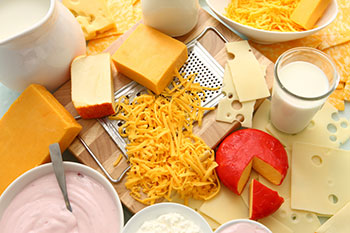
OK, you know what a grater is and have been using one all your life, but there are dozens of types on the market and most of them have at least two, and sometimes as many as eight, surfaces.
Grating creates fine threads by passing the ingredient over a serrated surface. The basic grater is a flat piece of metal with notches cut in its face and it is the size of the notch that determines the size of the threads.
Shredded food is usually thought of as being a larger, coarse thread while grating creates a finer one (that can even be as fine as powder). Shredded cheese will melt much slower than grated cheese by virtue of the difference in surface area between a coarse and fine thread. For a recipe like Philly Cheese Steak, I prefer to use cheese that has been finely grated. For a recipe where the cheese should melt slowly – on top of a casserole for instance – use shredded cheese.
There are a dizzying amount of choices of graters available. The basic 4 sided box grater is an essential kitchen tool. The one that I have has a face for fine shredding and coarse shredding. There is a face for both coarse and fine grating as well. Many box graters will have a face that cuts thin slices but I have never found this to be very effective.
I grate all hard cheeses in a rotary grater. Mine is a Zyliss and was a gift from an old medical school friend. The fine serrations are on a drum that rotates on a crank while you push the cheese into the hopper with a hinged plunger. This is one of the finest luxuries that I know of and should be one of your first kitchen purchases. There are a number of manufacturers and many offer different drums that grate from fine to very coarse.