
Chef Tim Says...
| Salad in a Jar Construction Kit | 08/03/20 |
| Cooking: the real aromatherapy | 05/18/20 |
| Get Started Cooking with Stews | 01/09/20 |
| Paella | 07/16/18 |
| How to make your own shrimp stock | 10/09/17 |
| All "Chef Tim Says..." Columns | |
Dr. Tim Says...
| Not So Magic Rice | 04/09/18 |
| Leaky Gut Syndrome Quackery | 10/02/17 |
| 4 ways to protect your brain with diet | 07/18/17 |
| Chicken skin: to eat, or not to eat | 06/19/17 |
| Change is here | 06/12/17 |
| Medical technology | 03/27/17 |
| All "Dr. Tim Says..." Columns | |
Chef Tim Says....
Pine Nuts
These lovely little seeds are used worldwide in so many cuisines. Recipes can be found from Native American to Mediterranean to Asian cultures.
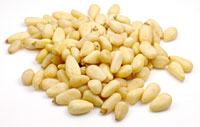 They are also known as pignoles, pinon, pine kernel, the
Italian nut and pignolia. Pine nuts are actually the seeds
found inside the pine cone. While every tree produces seeds,
only certain trees have nuts that taste good enough to
be edible.
They are also known as pignoles, pinon, pine kernel, the
Italian nut and pignolia. Pine nuts are actually the seeds
found inside the pine cone. While every tree produces seeds,
only certain trees have nuts that taste good enough to
be edible.
There are two main types of pine nut seeds. One is grown in the Mediterranean and is referred to as the Italian or Mediterranean pine nut. Extracted from the cones of the Stone Pine tree, these are a longer and more tapered nut. The flavor is lighter. The Chinese variety is harvested from a variety of trees and is more triangular in shape. It has a sharper and more pungent flavor. The Chinese pine nuts now account for about 2 million pounds of the nuts imported into the United States.
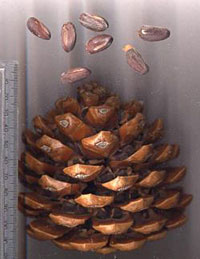 Pine nuts, like all seeds and nuts, are high in fat. A tablespoon
has 5 grams of fat, but as with most seeds and nuts, the majority
of the fat is monounsaturated fat, with 2 grams of monounsaturated
and 2 grams of polyunsaturated fat in a tablespoon. (see The
Health of It All - Nuts / Almonds.)
Pine nuts, like all seeds and nuts, are high in fat. A tablespoon
has 5 grams of fat, but as with most seeds and nuts, the majority
of the fat is monounsaturated fat, with 2 grams of monounsaturated
and 2 grams of polyunsaturated fat in a tablespoon. (see The
Health of It All - Nuts / Almonds.)
Pine nuts are easily found in health food stores, most grocery stores and specialty stores, as well as in Asian markets. Try to purchase only what you need for a particular recipe. Because of their high fat content, pine nuts will begin to turn rancid within a few months. Store them in a sealed container in a cool dry place.
1 ounce pine nuts = 146 calories, 14g fat, 2g sat fat, 5g mono fat, 7g protein, 4g carbohydrates, 1mg sodium, 0mg cholesterol, Vitamin K 15 mcg
Dr. Gourmet
April 28, 2008